

Softwashing vs. Pressure Washing: What’s the Real Difference?
When it comes to cleaning the exterior of a home or business, two methods tend to dominate the conversation: pressure washing and softwashing. While they might sound similar, these cleaning techniques are very different—and using the wrong method on the wrong surface can lead to damage, wasted money, and subpar results.
If you’ve ever wondered which option is right for siding, roofs, decks, sidewalks, or other exterior surfaces, this guide breaks down everything you need to know.
What Is Pressure Washing?
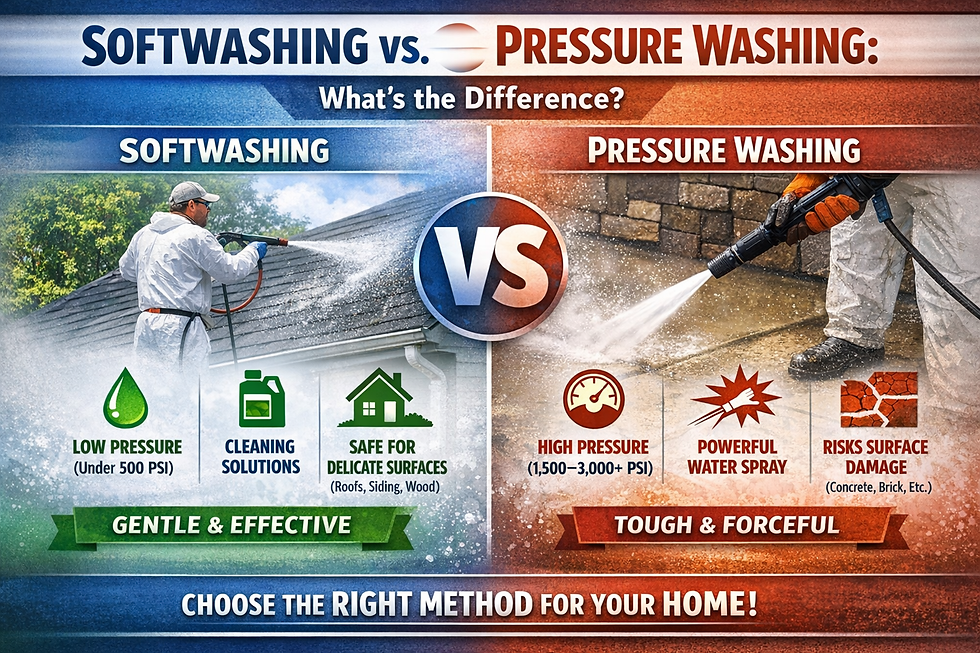
Pressure washing uses a high‑powered stream of water—typically 1,500 to 3,000+ PSI—to blast away dirt, grime, mold, mildew, and other tough buildup.It’s essentially a deep‑cleaning method that relies on force.
Best For:
Concrete driveways and sidewalks
Brick and stone
Patios
Heavy equipment or metal surfaces
Stubborn oil, mud, or paint residues
Advantages
Removes tough, stuck‑on grime quickly
Great for hard, durable surfaces
No chemicals necessarily required
Risks
Using too much pressure on the wrong material can lead to:
Etched concrete
Stripped paint
Damaged siding
Water forced behind surfaces
Broken seals around windows or doors
Pressure washing is powerful—but that power must be used carefully.
What Is Softwashing?
Softwashing is a low‑pressure cleaning method that relies on gentle water flow (under 500 PSI) combined with specialized cleaning solutions that break down mold, algae, and dirt at the root.
If pressure washing relies on force, softwashing relies on chemistry.
Best For:
Roof shingles
Vinyl siding
Stucco
Wood fences and decks
Screens and enclosures
Painted surfaces
Older or delicate materials
Advantages
Safe for virtually all exterior surfaces
Cleans biological growth (mold, algae, lichen) more effectively
Keeps surfaces cleaner longer because it kills growth at the source
No risk of structural damage from high pressure
Risks
Requires proper chemical handling
Should be performed by trained professionals to avoid plant or landscape damage
Softwashing is especially ideal for roof cleaning—most roofing manufacturers even recommend it to preserve shingle warranties.
Softwashing vs. Pressure Washing: Key Differences
Below is a simple comparison to help you decide which method suits your needs:
Feature | Softwashing | Pressure Washing |
Pressure Level | Low (under 500 PSI) | High (1,500–3,000+ PSI) |
Primary Cleaning Method | Cleaning solutions + low pressure | Forceful water pressure |
Best For | Roofs, siding, decks, painted surfaces | Concrete, stone, hard surfaces |
Risk Level | Low | Higher (potential surface damage) |
Longevity of Clean | Longer (kills growth at root) | Shorter (removes surface-level grime only) |
So… Which One Do You Need?
Here’s a quick rule of thumb:
If the surface is hard and durable → Pressure washing is usually safe.
If the surface is delicate or porous → Softwashing is the better, safer choice.
If mold, mildew, moss, or algae are the problem → Softwashing provides a deeper clean.
Many professional exterior cleaning companies use both, depending on the job. The best providers will inspect your surfaces and choose the safest, most effective method.
Final Thoughts
Understanding the difference between softwashing and pressure washing helps you protect your property, prevent costly damage, and ensure you get the best results from your cleaning service. Both methods have their place—but using them correctly is key.


Comments