

What Homeowners Should (and Shouldn’t) DIY When Cleaning Exterior Surfaces
Keeping your home’s exterior clean is one of the simplest ways to boost curb appeal, preserve property value, and prevent long-term damage. From siding and sidewalks to driveways and decks, a routine cleaning routine can make a big difference. But not all outdoor cleaning projects are safe—or smart—to tackle yourself. Some require professional tools, specialized knowledge, or safety precautions that go far beyond the average DIYer’s weekend skillset.
Here’s a clear guide to what homeowners can (and should) DIY—and what they should always leave to the professionals.
DIY-Friendly Exterior Cleaning Tasks
1. Light House Washing (Without a Pressure Washer)
A gentle wash using a garden hose, a soft brush, and a mild exterior cleaner is completely safe for most siding materials. This method is ideal for removing dirt, cobwebs, pollen, and surface-level grime.
Good candidates for DIY:
Vinyl siding
Painted wood (if the paint is in good condition)
Aluminum siding
Just avoid: harsh scrubbing tools, bleach-heavy cleaners, or anything abrasive.
2. Cleaning Windows and Screens
Exterior windows can be cleaned safely with basic tools: a squeegee, bucket, microfiber cloths, and a gentle glass cleaner. Screens can be rinsed with a hose.
DIY tips:
Work top to bottom.
Avoid pressure washing windows—water can seep behind seals and damage frames
Use a soft brush for screens to avoid stretching or tearing.
3. Basic Deck Cleaning
Sweeping debris, spot-cleaning stains, and using a deck-safe cleaner are all safe for DIY.
What you can do:
Apply deck cleaner with a pump sprayer.
Use a soft or medium-stiff brush to scrub.
Rinse with a hose.
Just avoid using a pressure washer on wood unless you have experience—it can quickly gouge the surface and cause permanent damage.
4. Clearing Gutters (With Proper Safety)
If your home is one story and you have a stable ladder, gutter cleaning is generally manageable.
DIY if:
You’re comfortable on a ladder.
Your gutters aren’t excessively clogged.
You use gloves and scoop debris by hand.
If your home is two+ stories or your gutters haven’t been cleaned in years, call a pro.
Exterior Cleaning Tasks to Leave to the Professionals
1. Pressure Washing Most Surfaces
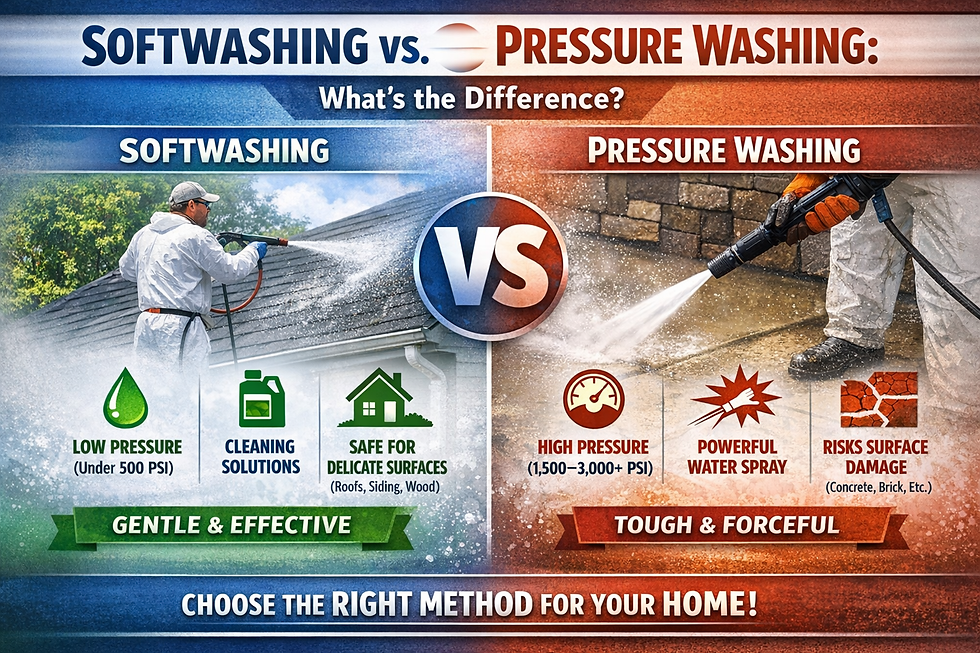
Pressure washers are powerful tools—powerful enough to:
Etch concrete
Crack pavers
Strip paint
Force water behind siding
Shatter window seals
What looks like a simple cleaning tool can easily cause thousands of dollars in damage if used incorrectly.
Surfaces requiring expert pressure washing:
Siding
Exterior trim
Brick and masonry
Wood decks or fences
Roofs (never pressure wash a roof!)
Professionals use the right PSI, tip, technique, and detergents to prevent damage—and they’re insured if something goes wrong.
2. Roof Cleaning
Roof materials—whether asphalt shingles, tile, slate, or metal—are extremely vulnerable to high pressure and harsh chemicals.
DIY roof-cleaning attempts often lead to:
Void warranties
Shingle granule loss
Leaks
Personal injury
Professional roof cleaning uses soft washing—a low-pressure system with the proper cleaning solutions to safely remove algae, moss, and stains.
3. Removing Mold, Mildew, and Algae
Treating organic growth can be tricky. Using the wrong cleaner or improper ratios can:
Spread spores
Damage plants
Discolor siding
Create health hazards
Professionals know how to apply solutions safely and thoroughly.
4. Cleaning High or Hard-to-Reach Areas
Second-story exteriors, steep driveways, tall retaining walls, or surfaces above 10 feet often require commercial equipment or ladders.
Accidents from falls are common in DIY scenarios. Professionals use:
Safety harnesses
Stabilized ladders
Telescoping wands
Commercial-grade sprayers
Let the pros handle anything involving height.
5. Deep Cleaning Driveways and Pavers
Removing stains, growth, or embedded dirt from concrete and pavers requires the right combination of pressure, detergents, and surface cleaners. Without the correct technique, DIY cleaning can distribute sand unevenly, crack pavers, or create tiger-striping marks.
Professionals leave behind an even, uniform clean.
Final Thoughts: Clean Smart, Not Hard
DIY cleaning is a great way to maintain your home's exterior between professional visits, but knowing your limits protects both your home and your safety. For most homeowners, a good rule of thumb is:
If you need strong pressure, harsh chemicals, or a ladder… it’s probably a job for a pro.


Comments